.jpg)
The Menai Crossing Problem: Why North Wales Needs a New Bridge — Not More Patches
- Hax Solh
- Oct 22, 2025
- 3 min read

For anyone who lives in Bangor, Menai Bridge, or Anglesey, the story has become painfully familiar. Every year, we see it again — the Menai Bridge closed, or traffic backed up for miles across the Britannia. It’s been happening for decades, and while reports, studies, and “plans” keep coming, nothing changes.


From Horses to Heavy Traffic: The Menai’s Historic Burden
When the original Menai Suspension Bridge opened in 1826, it was a marvel of its time — designed by Thomas Telford for horse-drawn carriages and pedestrians. It became a lifeline for Anglesey, connecting the island’s rural communities to the mainland. But nearly 200 years later, this same structure — designed before the invention of cars — is being asked to carry buses, vans, and constant modern traffic.
The bridge has had countless closures for safety works and high winds. Each closure grinds Anglesey and Gwynedd to a halt — isolating families, students, businesses, and even emergency services. We’ve reached a point where maintaining this bridge for heavy traffic is no longer engineering — it’s denial. Menai Bridge should be restored as a heritage pedestrian and cycling route, not a pressure point for North Wales logistics.

The Britannia Bridge: A Fire, a Fix, and a Funnel
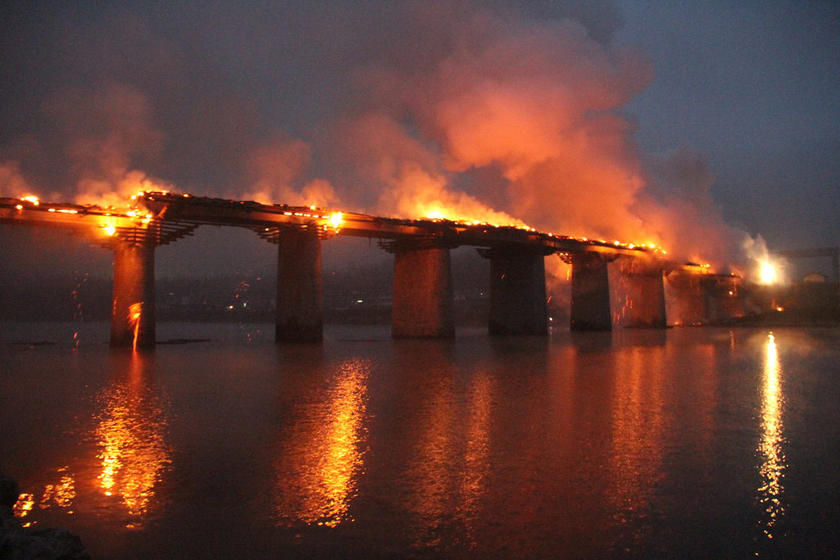
The Britannia Bridge, built in 1850 for trains, was another triumph of its time — until the fire of 1970 destroyed its iron tubes. Rebuilt and reopened for both rail and road, it became the main artery for all vehicle traffic to and from Anglesey. But it was never meant for this: a single-lane flow in each direction, merging traffic from three directions — Bangor, Caernarfon, and Holyhead. The result? 30-minute tailbacks, thousands of idling engines, and a daily carbon footprint that negates years of “green policy” talk.

A Region Waiting for a Catastrophe
Every day, hundreds of heavy vehicles use Britannia Bridge to access Holyhead Port, one of the UK’s most strategic transport links to Ireland. But we’re running all of that through a single Victorian-era crossing. If either bridge fails, the island’s economy, supply chain, and emergency response systems collapse overnight. This is not sustainable engineering — it’s risk management gone wrong.
The Financial Drain
Over the past decade, millions of pounds have been poured into patch repairs, wind safety works, and traffic management schemes. Meanwhile, the economic losses from congestion and closures run far higher — through delayed freight, fuel waste, lost productivity, and pollution. The question is no longer “Can we afford a new bridge?” but “How much longer can we afford not to?”
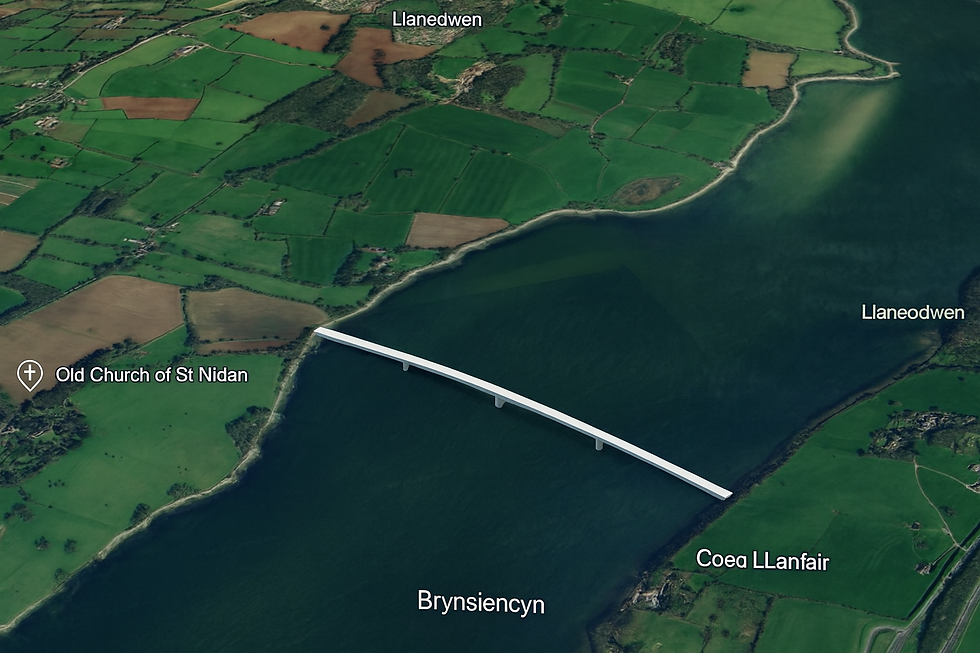
A Logical Solution: The Brynsiencyn–Caernarfon Crossing
At HAX Construction Engineering, we’ve been studying a route that makes structural, economic, and environmental sense. A new modern bridge could connect Caernarfon (near Felinheli) to Brynsiencyn — a crossing of roughly 900 meters (0.55 miles) over the narrowest part of the Menai Strait. The total new road required to link to Gaerwen would be around 6.6 km (4.1 miles) — a small investment compared to the decades of delay and emissions we face now.
This alignment would:
Directly connect major arterial routes like the A487 and A5
Reduce pressure on the Menai and Britannia crossings
Shorten freight routes to Holyhead by up to 15–20 minutes per trip
Cut thousands of tonnes of CO₂ emissions annually
Future-proof North Wales logistics for decades
Engineering Meets Identity
This is not just a road project. It’s about connecting communities — Bangor, Anglesey, Caernarfon, and the villages that depend on safe, reliable movement. A bridge is more than concrete and steel — it’s a statement of identity, of progress. Wales deserves infrastructure that reflects its strength, its culture, and its ambition for the future.
Time to Stop Talking and Start Building
The Menai Bridge should be celebrated, not overburdened. The Britannia should serve rail and limited road use, not act as a choke point for North Wales’ future. We’ve been reactive for too long — patching, waiting, spending, repeating.
A new crossing would be a generational investment — one that saves time, money, carbon, and lives. It’s not a luxury. It’s basic national infrastructure.




Comments